Google Translate
Overview
Google Translate remains the world's most ubiquitous translation tool, but its 2025-2026 evolution has fundamentally changed its technical underpinning. The application has transitioned from Neural Machine Translation (NMT) to a context-aware Large Language Model (LLM) framework. This enables the new "Ask" button, where users can refine a translation by requesting a different tone (formal vs. casual), an alternative regional variant, or even the inclusion of specific slang. This makes the app an active "Consultant" rather than a passive dictionary.
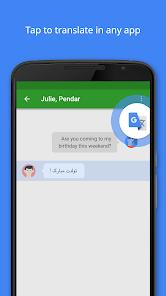
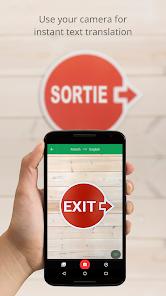
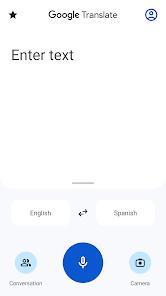
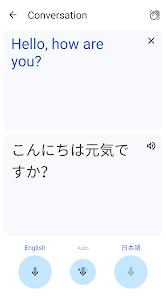
Technically, the app supports 108 languages via text and 94 via "Instant Camera Translation," which uses Augmented Reality (AR) to overlay translations on physical objects in real-time. A major 2025 breakthrough is "Live Translate" for conversations; by wearing headphones, users can hear real-time audio translations of dialogue in over 70 languages, making it a critical tool for international business, lectures, and social interaction. The architecture also allows for "Tap to Translate," enabling users to translate text from within any other Android app without switching context.
For travelers, the "Offline" capability remains its most robust feature. Users can download specific language packs to ensure high-accuracy translation even in remote regions without data access. This combination of cloud-powered AI intelligence and reliable local processing ensures that Google Translate remains the most versatile communication tool for a globalized world.
Pros & Cons
Elite Contextual Accuracy: The LLM upgrade allows the app to understand idioms and slang far better than traditional translation engines.
Unrivaled AR Utility: Instant camera translation is a life-saver for reading menus and street signs in real-time.
Reliable Offline Functionality: High-quality language packs allow for complete independence from internet connectivity.
Real-Time Conversation Mode: Enables natural, two-way bilingual dialogue with zero-lag audio feedback.
Seamless App Interoperability: "Tap to Translate" allows for instant translation within WhatsApp, browsers, and social media.
Gemini-Powered Refinement: Allows users to customize the tone of their translated messages to suit professional or casual settings.
Completely Free Infrastructure: Provides world-class translation technology at no cost to the end-user.
- ✕
Dialect Variation Challenges: While improving, it can still struggle with hyper-niche regional dialects compared to human interpreters.
- ✕
Voice Synthesis Tone: The automated voice can sometimes lack the emotional resonance found in human speech.
- ✕
Initial Download Storage: High-quality offline language packs can occupy significant storage space on budget devices.
Download

FAQs
How do I download languages for offline use?
Tap your profile icon, select "Downloaded languages," and choose the languages you need while connected to Wi-Fi.
Can Google Translate work in my ears during a live speech?
Yes, by using the "Live Translate" feature with any pair of headphones, you can hear real-time audio translation of the speech.
Does the "Ask" button work for all languages?
It is rolling out starting with major languages like English, Spanish, and Chinese, with more being added throughout 2026.
Can it translate handwriting?
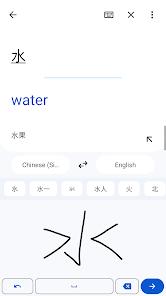
Yes, you can draw characters on your screen instead of typing, which is particularly useful for logographic languages like Japanese or Mandarin.
How accurate is the camera translation?
It is highly accurate for printed text like signs and books, though stylized or handwritten text can sometimes be harder for the AI to parse.
Hot Reviews
Users frequently report that the camera translation feature is the only reason they can successfully navigate grocery stores in foreign countries.
Language students praise the "Ask" button for explaining why one translation is formal and another is casual.
Many reviews highlight "Tap to Translate" as the best way to chat with friends across borders without leaving their messaging app.