
Workday
Overview
Workday stands as a preeminent cloud-native solution designed to centralize Human Capital Management (HCM), financial management, and enterprise resource planning (ERP) for large-scale organizations. The application serves as the mobile nexus for an ecosystem that effectively eliminates traditional data silos by housing HR, finance, and analytics within a single, unified SaaS architecture. As of the 2026 update cycles, Workday has significantly expanded its mobile capabilities, moving beyond simple task management to provide a robust platform for real-time organizational decision-making.
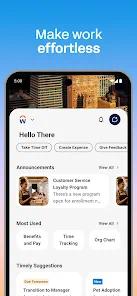
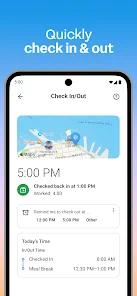
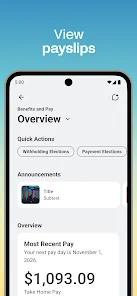
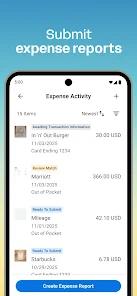
The functional breakdown of the Workday mobile experience reveals a dual-purpose interface tailored for both employees and management. For the general workforce, the application facilitates "Employee Self-Service," allowing users to manage personal records, submit expense reports, track performance goals, and access payroll information through an intuitive, biometric-secured portal. The "gigs and jobs" feature within the 2026 version further promotes internal mobility by identifying opportunities for growth within the parent organization. For managers, the app provides a sophisticated command center capable of handling complex approvals, compensation changes, and performance reviews on the go.
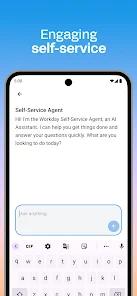
Workday is consistently rated higher by industry reviewers for its service support and modern interface. Furthermore, the emergence of AI-powered service management platforms like Siit has augmented Workday's utility; these integrations allow AI to detect request types directly from Workday records and automate service workflows like onboarding and IT provisioning without manual intervention. It supports 34+ languages and serves in 100+ countries.
Observations of the Workday app in the 2026 landscape suggest a shift toward "intelligent productivity". The application no longer just stores data; it interprets it, providing managers with real-time dashboards and interactive reports that predict future headcount needs and diversity metrics. This evolution reflects a broader industry trend where ERP systems are transforming into proactive advisors rather than passive databases.
Pros & Cons
Unified Enterprise Visibility: By integrating finance, HR, and payroll into a single cloud environment, Workday provides a "single source of truth" that reduces administrative errors and ensures data consistency across the organization.
Global Compliance Mastery: The platform’s ability to automatically update according to shifting labor laws and tax regulations in over 100 countries makes it indispensable for regulated industries and global enterprises.
Superior Mobile Security: Utilizing mobile-native technology like biometric authentication and cloud-based storage, Workday ensures that sensitive employee data remains protected even if a physical device is compromised.
AI-Driven Talent Management: The 2026 Talent Management suite automates the entire employee lifecycle, from initial recruiting and AI-assisted onboarding to learning management and succession planning.
Extensive Integration Ecosystem: With over 600 pre-built connectors and APIs, the app seamlessly merges with existing business tools, supporting a "best-of-breed" technology strategy for IT teams.
Employee Empowerment Features: The robust self-service portal reduces the burden on HR departments by allowing employees to manage their own benefits, schedules, and training independently.
High Service and Support Ratings: Compared to other enterprise suites, Workday is frequently cited for better customer service and easier deployment protocols.
- ✕
Substantial Learning Curve: The sheer depth of functionality requires a significant investment in training for both administrators and end-users to fully leverage the platform's capabilities.
- ✕
Inflexible Legacy Workflows: As a configuration-focused platform rather than a highly customizable one, Workday may struggle to accommodate specialized or antiquated business processes that deviate from its core architecture.
- ✕
High Total Cost of Ownership: Between the subscription fees, which range from $100–$200 per user annually, and high implementation costs, the platform is often prohibitively expensive for small-to-mid-sized businesses.
Download


FAQs
Can the Workday app be used by any individual?
No, the app is designed specifically for Workday customers and requires authorized enterprise credentials to function.
Does the app store sensitive payroll data on the mobile device?
No, Workday stores all information in the cloud rather than locally on the device, ensuring that data remains secure and up-to-date across all platforms.
Can managers approve leave requests directly from their smartphone?
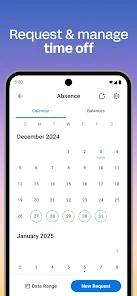
Yes, the app allows managers to approve employee requests, including time off and compensation changes, with a single tap through mobile notifications.
Is the Workday mobile app compatible with older versions of Android?
As of 2026, the application requires Android version 12 or higher to ensure compatibility with modern security features and performance standards.
How does the app handle internal job applications?
The app features a dedicated "Gigs and Jobs" section where employees can find and apply for internal opportunities within their organization.
Hot Reviews
The system excels at enterprise-level tasks by unifying finance and HR data into a single pane of glass. Users find the automation of complex processes and the actionable analytics to be the most valuable aspects for large-scale operations.
The interface is clean and functional, allowing employees to quickly book time off, manage vacation schedules, and stay on top of tasks with helpful notifications that don't feel intrusive.
While the app is highly configurable to match specific payroll policies, this flexibility can sometimes lead to complexity. Some users note that changing certain workflows requires more expertise than initially anticipated.