






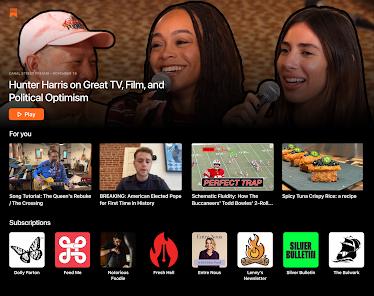
Substack has established itself as the premier platform for independent writing and digital community building. The application’s core mission is to provide creators—writers, journalists, and podcasters—with a "digital headquarters" where they can publish content, grow an audience, and monetize directly via paid subscriptions.
The Substack ecosystem is defined by audience ownership; unlike traditional social media platforms, creators on Substack own their email lists and can export them to other services at any time. This has made it a refuge for journalists seeking independence from traditional newsroom structures. The mobile app itself is designed as a "zen-like" reading environment, pulling newsletters out of the cluttered email inbox and into a clean, dedicated feed.
Substack’s monetization model is simple: it is free to use for free newsletters, and the platform takes a 10% cut of any revenue generated from paid subscriptions. While this "one-size-fits-all" model is easy to understand, it has become a point of contention for large-scale publishers. As a newsletter grows, a 10% revenue share can become substantially more expensive than the fixed monthly fees charged by competitors.
Furthermore, while Substack has added features like Substack Notes (a short-form social feed) and native podcasting support to improve discoverability, it still suffers from "discoverability issues" for smaller creators. Most successful Substack writers rely on external traffic from Twitter or LinkedIn to build their initial subscriber base, as the in-app recommendation engine is still maturing.
Pros
Beginner-friendly with no technical or coding skills required.
Creators have total control and ownership over their email lists.
Built-in discussion and commenting tools foster deep engagement.
Seamless integration of text, audio (podcasts), and short-form notes.
Cons
High 10% transaction fee for successful creators.
Limited design and branding customization options.
Basic analytics; lacks advanced segmentation or A/B testing.
Growing competition makes internal discoverability difficult.
FAQs
You can choose to put specific posts behind a paywall. Subscribers then pay a monthly or yearly fee via Stripe to access your content.
It is a social-media-style feed within the app that allows writers to share short thoughts and interact with readers without sending a full email.
Yes, but the platform typically charges a one-time fee to set up a custom domain.
No, if you do not charge for your content, Substack provides its services completely for free.
Hot Reviews
You can choose to put specific posts behind a paywall. Subscribers then pay a monthly or yearly fee via Stripe to access your content.
It is a social-media-style feed within the app that allows writers to share short thoughts and interact with readers without sending a full email.
Yes, but the platform typically charges a one-time fee to set up a custom domain.
No, if you do not charge for your content, Substack provides its services completely for free.