
CrimeRadar: Dispatch Alerts
Overview
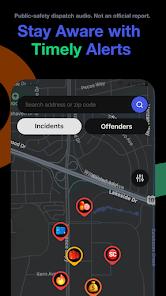
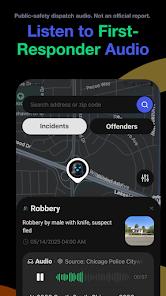
CrimeRadar: Dispatch Alerts (developed by Particle Media/NewsBreak) is a controversial real-time crime monitoring tool that leverages artificial intelligence to interpret police radio traffic. The functional decomposition of the app reveals an "automated alert system": the app monitors police scanner frequencies and uses AI to transcribe audio into "breaking news" mobile notifications. This aims to provide users with hyper-local awareness of criminal activity or emergency responses in their immediate vicinity.
Deep insights into the CrimeRadar ecosystem reveal a significant friction point between digital transparency and public safety. Because the app relies on AI to interpret raw scanner data without human verification, it often misinterprets police codes or tactical transmissions. This has led to high-profile controversies, such as a false report of "firearms discharged" at an elementary school when a student had merely pulled a fire alarm. Strategically, the app targets the "hyper-local news" market, positioning itself as a necessary tool for community safety, yet law enforcement agencies in several states have issued warnings that the app "creates panic" by disseminating unverified information.
From a technical perspective, the app's AI transcription accuracy has been rated as "poor," especially when dealing with agencies that use numeric codes instead of plain English. Furthermore, the app has been noted for "scraping" tactical talkgroups, which raises concerns about compromising active law enforcement operations. While the app provides a valuable service in terms of awareness, its reliance on unverified AI-generated content makes it a high-risk information source.
Pros & Cons
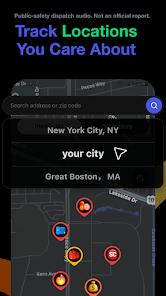
Hyper-Local Awareness: Provides immediate alerts regarding incidents occurring within a user's specific neighborhood.
Real-Time Speed: The AI system pushes notifications within minutes of the initial radio transmission.
Broad Geographic Coverage: Aggregates feeds from numerous police, fire, and EMS agencies across multiple counties.
Community Transparency: Allows residents to be aware of emergency responses that may affect their daily activities or travel.
Integration with NewsBreak: Leverages a massive news network to provide additional context for confirmed local stories.
- ✕
Inaccurate AI Transcriptions: Frequently misinterprets police codes, leading to false reports of violent crime.
- ✕
Risk of Public Panic: The lack of human verification has resulted in widespread panic over non-existent emergencies.
- ✕
Privacy and Operational Security: Scraping tactical radio frequencies can interfere with sensitive law enforcement activities.
Download


FAQs
Is CrimeRadar verified by local police?
No, police departments have explicitly stated they do not work with the app and often warn against its unverified alerts.
How does the app get its information?
It uses AI to monitor and transcribe public police and emergency service radio scanner traffic.
Why are some alerts incorrect?
The AI can misinterpret police codes or context, such as reporting a fire drill as a real fire incident.
Can I request my data to be deleted?
Yes, the developer allows users to request the deletion of their personal and location data.
What should I do if I see a crime alert?
Authorities recommend verifying the information through official police social media or local news before taking action.
Does the app cover rural areas?
While it covers many regions, its accuracy is significantly lower in areas where addresses use numerical county roads.
Hot Reviews
This app reported a shooting at my kid's school, and it turned out to be a fire drill. The panic it caused among parents was terrifying. It needs a human editor.
The transcription is often way off. It interprets police codes incorrectly all the time, making routine traffic stops sound like major crimes.
Despite the errors, it’s helpful to know why there are sirens on my street. You just have to take everything it says with a grain of salt.
I’m worried that this app is listening to tactical police channels. That seems like it could put officers in danger during real emergencies.