
Say The Word On Beat Challenge




Overview
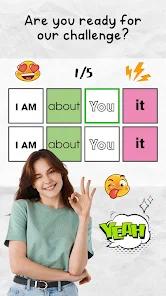
The application represents the commercialization of ephemeral social media trends. Developed to capitalize on the "timing challenge" phenomena ubiquitous on platforms like TikTok and Instagram Reels, this application functions as a dedicated rhythm-based speaking simulator designed to test cognitive processing speeds and motor-vocal synchronization. Unlike traditional rhythm games that rely on haptic feedback—such as tapping or swiping—Say The Word On Beat Challenge utilizes the user's voice as the primary controller. The core loop requires the player to observe a rapidly changing sequence of visual prompts (often flashing images of animals, foods, or pop-culture icons) and articulate the correct name exactly on a rhythmic beat.
The technical architecture of the software is engineered to facilitate the "duet" or "reaction" content format. By splitting the screen between the prompt video and the device's front-facing camera, the app allows users to record their attempts in real-time, capturing the inevitable verbal "glitches" that occur as the tempo increases. This induced failure is a deliberate psychological hook; the frustration of missing a beat serves as a driver for replayability and social sharing, as the resulting clips are often humorous and tailor-made for viral distribution.
Market-wise, the app positions itself as a hyper-casual utility for content creators. It provides built-in tools for saving and downloading these videos, effectively bypassing the need for complex external editing software. However, the marketplace for such apps is highly fragmented, with numerous developers like Nindafuit and Cem Software offering nearly identical clones, often differentiated only by their ad-density and the inclusion of peripheral features like "Insect Prank Filters". The emergence of Say The Word On Beat Challenge highlights a shift where mobile apps are no longer just standalone games but are peripheral components of a broader cross-platform social media ecosystem.
Pros & Cons
High immediate fun factor with minimal learning curve; leverages existing social media familiarity.
Seamless integration of front-facing camera with game cues; easy export to TikTok and Reels.
Low hardware requirements; functions on a wide range of legacy Android devices.
Broad language support options provided during initial setup.
- ✕
Rapid onset of mechanical repetitiveness; limited long-term progression systems.
- ✕
Interface often feels unpolished or derivative; reports of assets being repurposed without license.
- ✕
Excessive interstitial and banner advertisements that frequently interrupt the game loop.
- ✕
Persistent bugs where language settings fail to apply to the actual game cues.
Download
 Get it on Google Play
  Get it on App Store
 FAQs
How does the synchronization between audio and visuals function?
The app uses a fixed-tempo metronome logic that triggers visual state changes and audio cues simultaneously to ensure consistency.
Can the app be used effectively for cognitive training?
While primarily entertainment, the app tests the Stroop effect and rapid naming, which are key components of cognitive processing speed.
Does the app require constant internet access?
Yes, primarily to serve the density of advertisements required for the free-to-play model and for social sharing API calls.
Are the "Insect Prank Filters" safe for younger users?
These are AR overlays designed for humor, but their realistic nature may be distressing for users with phobias.
Hot Reviews
Enthusiastic users frequently highlight the "satisfaction" of completing a high-speed round and the ease with which they can generate engaging content for their social circles. These users typically view the app as a social tool rather than a standalone game.
A significant portion of the critical feedback focuses on the "ad-to-gameplay ratio." Many users report being subjected to multiple unskippable video ads before they can even initiate a single round, a practice that frequently leads to immediate uninstallation.
Technical complaints regarding the language selection mechanism suggest that while the app claims broad accessibility, the execution often leaves non-English speakers with English cues, or vice versa, hindering the central rhythm-naming mechanic.