Redfin: Buy, Sell & Rent Homes
Redfin's edge is structural, not cosmetic: because it's a licensed brokerage tied to the MLS, its listings refresh in near-real time and its home-tour booking skips the usual scheduling back-and-forth. The trade-off is that its high-volume, team-based model can make the human side of a deal feel less personal than a dedicated independent agent, and the app leans hard on selling you its own mortgage and title services.
- Active buyers in competitive metro markets who need the fastest possible listing updates and same-day tour booking to move before other shoppers do
- Cost-conscious sellers drawn to Redfin's reduced listing commission (typically ~1–1.5%, or lower if they also buy through Redfin) and comfortable with a team-based, platform-driven process
- Buyers or sellers who want one dedicated, high-touch agent guiding them personally from first showing through closing
- People house-hunting in rural or smaller markets where Redfin's agent and data coverage thins out, and anyone who dislikes in-house mortgage and title cross-selling or is uneasy about third-party data sharing




Overview
Most real-estate apps are advertising portals: they show you listings that other people’s agents paid to place, and the actual work of touring and buying happens somewhere off-screen. Redfin’s most important decision is to be something different — a licensed brokerage that employs its own agents and folds search, touring, and financing into one app. That structural choice is what produces its two best features: listings that refresh in near-real time because they’re tied directly to the MLS, and home tours you can book on the spot instead of trading emails for days. For a buyer trying to win a home in a fast market, those are real, tangible edges. The honest counterweight is that the same high-volume model that makes Redfin efficient can make the human side of a transaction feel less personal, and the app is unmistakably built to route you toward Redfin’s own services. Both things are true, and they have to be weighed together.
What Redfin actually is
Redfin (package com.redfin.android, developer Redfin) is a full-service real-estate app rather than a listings directory, and the distinction matters more than it sounds. Because Redfin is a licensed brokerage that directly employs agents, the app isn’t just showing you homes — it’s the front door to a company that can tour you through them, represent you in an offer, and, now that Redfin is part of Rocket Companies, pre-approve your mortgage through Rocket Mortgage. Search, touring, and financing live under one roof, a different proposition from apps that stop at the listing.
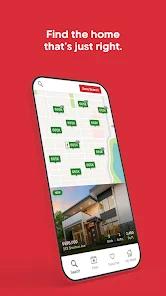
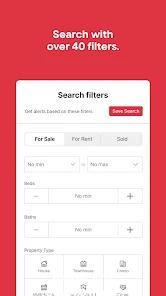
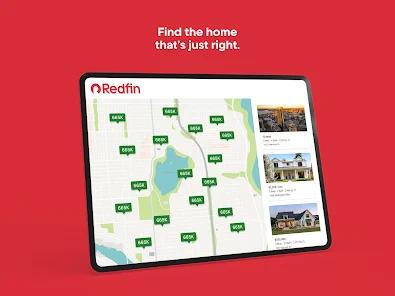
The core experience is home search, and it’s polished: a fast, modern interface with satellite and “parcel pricing” maps that surface prices directly on the map as you pan. There’s rental search too, with map views and amenity filters, so it isn’t purely a for-sale tool. But what sets it apart isn’t any single screen — it’s what the brokerage model lets the software do underneath.
The speed advantage is the real headline
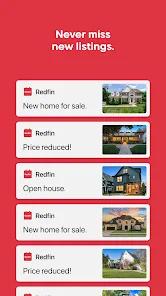
The feature we’d point a competitive-market buyer to first is listing speed. Because Redfin is tied into the MLS as a brokerage, its listings refresh roughly every two minutes — a figure from Redfin’s own material, but a meaningful one. In markets where good homes are gone in a weekend, the gap between a portal on a slower syndication schedule and one that reflects the MLS in near-real time can be the difference between touring a home and reading that it’s already under contract.
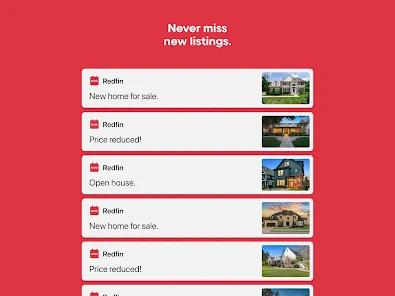
This is also the loudest theme in positive user reviews: people describe Redfin as the “fastest” app, crediting its update speed and notifications with helping buyers get in front of a home ahead of shoppers on other platforms. That’s a recurring sentiment rather than a one-off, and it lines up with how the brokerage-and-MLS integration is meant to work. If you’re playing offense in a tight market, this is the reason Redfin belongs on your phone.
Instant Booking and the Redfin Estimate
Two other features flow from the same integrated model. “Instant Booking” lets you schedule a home tour directly in the app, coordinated with a local showing agent — bypassing the email-and-voicemail back-and-forth that usually precedes a first visit, often for a same-day slot. For anyone who has tried to line up weekend showings around a listing agent’s calendar, removing that friction is a real convenience.
The “Redfin Estimate” is the app’s automated home-valuation tool, and it’s well-regarded — it earns a reputation for accuracy relative to many free online estimators. We’d stress the honest framing Redfin itself uses: it’s an estimate, not an appraisal. The company’s own FAQ recommends a professional appraisal or a comparative market analysis before you lean on any automated number for a real decision. Treated as a fast starting point rather than a verdict on what a home is worth, it’s one of the better valuation tools in a consumer app.
The commission model, and the cross-selling
For sellers, Redfin’s pitch is money. Its model charges a reduced listing commission — typically around 1–1.5%, and as low as 1% if you also buy your next home through Redfin, against the roughly 2.5–3% that’s standard. Redfin’s stated way of doing this is to employ agents directly and offload much of the administrative work onto its platform, so each agent can handle more clients at a lower fee. That’s a legitimate structural saving, not a gimmick, and for a seller it can translate into real dollars kept at closing.
The caveat sits right next to it. The app is brokerage-centric by design: it prioritizes Redfin’s own agents and services, and it cross-sells its in-house mortgage (via Rocket Mortgage) and title offerings assertively. Some users find that integration convenient; others find the steady nudging toward Redfin’s financial products narrows their exposure to outside options. There’s nothing hidden about it — this is how the company monetizes a free-to-search app — but if you prefer to shop your mortgage independently, the app’s pull toward its own ecosystem is something to expect going in.
Where the model shows its seams
The same high-volume, team-based approach that lowers fees is also the source of the app’s most substantive criticism — a service question rather than a software one. Redfin’s structure often splits a transaction across specialists — different people for touring, closing, and marketing — with each agent carrying more clients than a traditional independent Realtor might. When that machine runs well, it’s efficient. When it doesn’t, users report the human guidance feeling thinner than they’d like, particularly during the complex, high-stakes closing process where a steady single point of contact is reassuring.
The user reviews reflect this honestly. Alongside the praise for speed, there’s a recurring, less flattering theme: some buyers and sellers describe “lackluster” agent interactions, with agents who seemed “too busy,” or who they felt undervalued a property to push a quicker sale. We’d read these as specific user experiences rather than a universal verdict — a 4.6 average across ~156,000 ratings signals a great many satisfied customers — but the pattern is consistent enough to name as a real trade-off of the model, not a fluke.
Two more caveats round out the picture. Coverage thins in rural and smaller markets, where Redfin’s agent presence and data depth don’t match its major-metro offering — so the experience varies by where you’re searching. And on privacy: per its own disclosures, the app shares some personal information and app activity with third parties. That data is described as encrypted in transit, and Redfin allows data-deletion requests, but users sensitive about activity-sharing should know it’s part of the arrangement.
How it compares
Set against pure advertising-portal real-estate apps — the ones that aggregate listings but don’t employ agents — Redfin’s differentiator is the integrated brokerage itself. A portal can show you homes; Redfin can show you homes, refresh them at MLS speed, book your tour with its own showing agent, represent you at a reduced commission, and pre-approve your loan, all in one flow. That end-to-end integration is the case for choosing it.
The counter-case is service consistency. A great independent agent found through a portal gives you dedicated, personal representation that Redfin’s team-based system, by design, distributes across specialists. Neither approach is simply “better” — it’s a genuine trade between an efficient, cost-lowering platform and high-touch individual guidance. Which fits depends on whether you value speed, savings, and integration or a single trusted person walking you through every step. Redfin trades some of the personal touch for structural advantages a listings-only app can’t match.
A word on recency
This is an actively maintained, large-scale product. The Play Store listing was updated April 1, 2026, carries 10M+ installs and 11 screenshots, and holds a 4.6 rating across roughly 156,000 ratings. That combination of scale, recency, and a strong average score points to a well-supported app — now with the added weight, and cross-selling, of Rocket Companies behind it.
Our take
Redfin earns a recommendation because its structural advantages are real and hard to get elsewhere: near-real-time MLS listings, same-day tour booking through its own agents, a well-regarded (if still non-binding) valuation tool, and a genuinely lower seller commission. For an active buyer in a competitive market or a cost-conscious seller comfortable with a platform-driven process, that package is strong. We stop short of a blanket endorsement mainly because the human side is where the model shows strain — the high-volume, team-based structure can feel less personal than a dedicated agent, especially through closing, and the app pushes its in-house mortgage and title services hard. If you want one high-touch agent from first showing to signed papers, if you’re searching a thin rural market, or if you’d rather shop financing independently, those are fair reasons to look elsewhere. For everyone else, Redfin is one of the more capable real-estate apps available — best understood as a brokerage you carry in your pocket, with all the efficiency, and all the built-in bias, that implies.
How We Evaluate
We assess every app on the same checklist: what problem it genuinely solves, how well the core promise holds up in real use, where users consistently hit friction, and who should look elsewhere. Importantly, we did not conduct hands-on device testing, and we do not attempt to judge the quality of any individual Redfin agent or the outcome of any specific transaction — those vary by market and person and sit outside what a software review can responsibly assess. Our analysis is grounded in the app's Play Store listing and FAQ, its store signals (a 4.6 rating across roughly 156,000 ratings and 10M+ installs, last updated April 1, 2026), the recurring themes in user reviews, and Redfin's public reputation as a major US real-estate brokerage, now part of Rocket Companies.
Pros & Cons
Unmatched Listing Speed: Refreshes from the MLS every two minutes, ensuring users are the first to see new homes in their area.
Tangible Transaction Savings: Offers listing fees as low as 1%, potentially saving home sellers thousands of dollars in commission.
Seamless Tour Scheduling: Allows for instant on-demand booking of home tours, often with same-day availability.
Superior Accuracy in Estimates: The Redfin Estimate is highly regarded for its reliability, utilizing real-time local sales data over algorithmic trends.
Advanced Map Visualization: Features a modern, fast-loading map with "parcel pricing" that allows users to see neighborhood values at a glance.
Integrated Financial Services: Connects directly with Rocket Mortgage to provide streamlined pre-approvals and loan tracking.
- ✕
Potential Service Inconsistency: The high-volume model can result in less personal attention from agents compared to independent Realtors.
- ✕
Brokerage-Centric Bias: The app naturally prioritizes Redfin’s own agents and services, which may limit a user's exposure to outside market expertise.
- ✕
Limited Rural Coverage: Data and agent availability can be significantly lower in smaller markets or rural areas compared to urban centers.
- ✕
Aggressive Cross-Selling: Frequent prompts to use in-house mortgage and title services can clutter the search experience for some users.
Download


FAQs
How does Redfin offer such low commission fees?
Redfin employs its agents directly and uses technology to automate administrative tasks. This efficiency allows them to charge 1.5% (or 1% if you also buy with them) instead of the standard 3%.
Is the Redfin Estimate accurate enough for a home sale?
While it is more accurate than many other automated tools, it is still an estimate. A professional appraisal or a Comparative Market Analysis (CMA) from an agent is still recommended for pricing.
What is the benefit of booking a tour through the app?
Instant booking allows you to bypass the days of "back-and-forth" emails between agents. You pick a time, and a Redfin showing agent meets you at the house.
Can I use Redfin to find rentals?
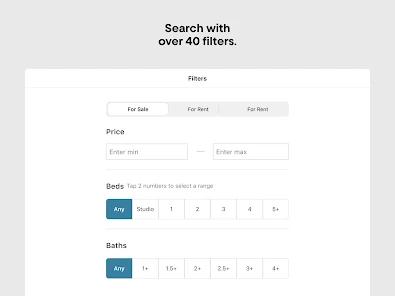
Yes, the app now includes a comprehensive search feature for all rental listings, complete with neighborhood maps and amenity filters.
How does Redfin handle data safety?
The app shares some personal info and app activity with third parties but uses encryption for data in transit and allows users to request data deletion.
Do Redfin agents work as a team?
Yes, Redfin uses a "team-based" approach where different specialists handle different parts of the transaction, such as touring, closing, and marketing.
Hot Reviews
Users consistently praise Redfin for its update speed. Many first-time buyers report that they were able to secure a home specifically because the app's notification beat other platforms by several hours.
While the technology is loved, some users report "lackluster" experiences with the agents themselves. Feedback includes complaints about agents being "too busy" or "undervaluing" properties for a quick sale rather than a maximum profit.
The app is frequently cited as being the most "user-friendly" in the sector. Features like the "satellite map" showing prices instantly on houses are a highlight for those searching in high-density areas.