
Just Eat - Food Delivery
For anyone with a valid UK postcode, Just Eat is one of the widest food-and-more delivery marketplaces you can install, spanning 90,000-plus restaurants, supermarkets and specialty shops. Its breadth is genuinely hard to match, but the experience is dragged down by increasingly automated support that users find slow to refund order problems, and order tracking that can announce 'delivered' before the courier arrives.
- UK-based diners who want a single app covering hot takeaways (McDonald's, KFC and thousands of local restaurants) plus groceries and household items via partners like Sainsbury's and Co-op, and even beauty, pharmacy and floral from retailers like Superdrug
- People who value the practical postcode search — filtering nearby merchants by cuisine, distance, star rating and minimum order — and who like payment flexibility including cash-on-delivery or pickup where a merchant offers it
- Anyone outside the UK or travelling abroad: the app is geo-locked, needs a valid UK postcode, and is effectively non-functional elsewhere
- Users who need responsive human support and dependable refunds when an order goes wrong, or who relied on reading detailed local text reviews before ordering — both of which recent changes have made harder
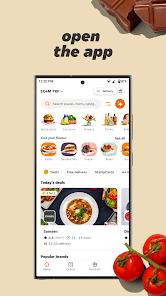
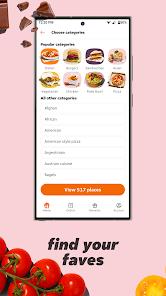
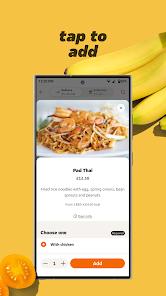

Overview
If you live in the UK and want the single widest net for getting food — and increasingly much more than food — to your door, Just Eat is the app that casts it. What began as a plain takeaway directory has grown into a multi-vertical marketplace stitching together more than 90,000 restaurants, supermarkets and specialty shops, and that sheer catalogue is its strongest argument. But breadth is only half the story. The parts of the experience that matter most when something goes wrong — getting a human to help, trusting the tracker, checking whether a local kitchen is any good — are exactly where the app has been slipping, and we think buyers deserve to hear that plainly before they lean on it for every order.
From takeaway directory to a marketplace for almost everything
The evolution here is the headline. Just Eat no longer sees itself as a place to order a curry on a Friday night; per its own description, it now spans three core categories. The first is the familiar one — hot takeaway food, from national brands like McDonald’s and KFC down to the independent local restaurants that have always been the backbone of the platform. The second is groceries and household essentials, delivered through supermarket partners including Sainsbury’s and Co-op, which turns the app into a same-hour corner-shop run as much as a dinner service. The third is specialized retail: dedicated channels for health, beauty, floral and daily necessities from retailers like Superdrug, so a birthday bouquet or a forgotten pharmacy item sits in the same basket flow as a pizza.
That three-in-one breadth is the real differentiator. Plenty of apps deliver dinner; far fewer let you order a takeaway, top up your groceries and send flowers from one login. With 90,000-plus merchants integrated, the odds that whatever you want is available near you are simply higher than on a thinner competitor — reason enough to keep the app installed if you value one place that covers most of your on-demand needs.
Postcode search that actually helps you decide
The mechanism that makes all this usable is the postcode search, and it’s one of the app’s quieter strengths. You enter a postcode and the app indexes the merchants around you, then presents them categorized so you can narrow the field fast. The filters are the practical kind people actually use: cuisine, distance, star rating and minimum order. That last one matters more than it sounds — screening out a place with a high minimum spend before you’ve built a basket saves the small, repeated frustration of getting halfway to checkout and bailing.
Users single this filtering out as a genuine convenience, and it holds up. When your local area has dozens of options across several verticals, tools that let you sort by what you care about — nearest, cheapest to deliver, best rated — are the difference between a marketplace that’s overwhelming and one that’s quick to shop. Layered on top are localized promo banners keyed to your postcode, surfacing offers relevant to where you are, though as always with promotions the value varies and they’re best treated as a bonus rather than a reason to order.
The Food Tracker, and why we won’t call it flawless
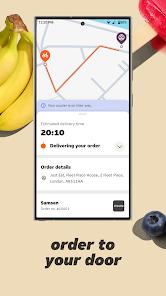
Just Eat’s real-time order tracking — the Food Tracker — is a real, useful feature, and we want to be fair about it. It’s designed to monitor the milestones of your order through automated push notifications: the restaurant receiving it, the kitchen preparing it, the courier being dispatched. When it works, that visibility is reassuring, and for many orders it does what it promises.
Here we have to be straight about an internal tension. The app’s own promotional framing leans toward presenting tracking as highly accurate, but the description, the listed drawbacks and the recurring user reviews all point somewhere more mixed: accuracy can be inconsistent, and one failure comes up repeatedly — the status flipping to “delivered” before the courier has actually arrived. That premature marker isn’t just cosmetic. It can undercut a later dispute (“the system says it arrived”) and erodes the very trust a live tracker is meant to build. So our read is measured: treat the Food Tracker as a helpful feature that usually orients you correctly, but don’t assume the “delivered” stamp is proof anything reached your hands. Users report it sometimes gets ahead of reality.
Support and refunds, stated plainly
This is the area we’d weigh most heavily before relying on the app, and it’s a genuine caveat rather than a dealbreaker. As Just Eat has scaled, its customer support has shifted heavily toward automated workflows, and the recurring theme in user reviews is that those bots are hard to get past when an order goes wrong. Specifically, users describe difficulty securing refunds for missing items and report rising rates of dispute rejection for missing items or delayed deliveries — a sentiment echoed by the app’s own description, which acknowledges automation-driven friction and increasing dispute-rejection rates.
We’re attributing that to users and to the platform’s stated operational challenges, not asserting it as a universal outcome — plenty of orders arrive fine and never need support at all. But the pattern is consistent enough to name. If this is your default for groceries and dinner several times a week, you’ll eventually hit a missing item or a late order, and the ease of resolving it is part of the product. Here, that resolution path is where the experience feels thinnest.
Reduced review transparency
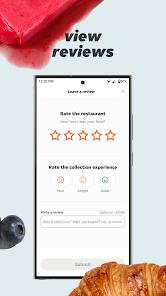
A more recent and pointed change concerns the reviews themselves. Recent updates have removed or restricted the detailed historical text reviews that used to sit on merchant profiles, and the FAQ confirms this reduced visibility. For a platform where a lot of the inventory is small, unfamiliar local kitchens, those written reviews were how many people judged whether a place was worth the risk — not just a star average, but the specifics of what other diners actually experienced. Users are frustrated by the loss, and it’s easy to see why: without that community detail, checking a venue’s food quality or reliability before ordering is harder than it was. It’s a reduction in the transparency people had come to rely on, and it lands awkwardly against the app’s headline strength of offering so many merchants to choose from.
Strictly a UK app
One practical boundary that catches people out: Just Eat is strictly geo-locked to the UK. It requires a valid UK postcode to function and is effectively non-functional abroad. If you travel, don’t expect to open it in another country and order dinner — this is a domestic tool, full stop. It’s not a flaw so much as a scope to know going in, particularly if you hoped for one delivery app that follows you overseas.
How it compares
The UK delivery market is crowded and competitive, with several well-known apps chasing the same orders. Against that field, Just Eat’s clearest edge is breadth: the multi-vertical span across takeaways, groceries and specialty retail, plus the huge merchant count, gives it a catalogue that’s hard for rivals to match, and the postcode filtering keeps it navigable. Where it trails is the support and tracking layer — the automated-refund friction, the occasional premature “delivered” marker, and the pared-back reviews are more pronounced pain points here than the shopping experience would suggest. Which app is “best” depends on what you weight: Just Eat trades some polish in problem-resolution and transparency for unrivalled selection.
A word on recency
This is an actively maintained, large-scale app. The Play Store listing was updated March 27, 2026, and it carries 10M+ installs and a 4.6 rating across roughly 1.06 million ratings under Just-Eat Holding Limited, with seven screenshots on the listing. That mix of scale, recency and a strong average score signals a well-supported, heavily used product — even as the review themes make clear the support and tracking complaints haven’t been fully put to rest.
Our take
Just Eat is a genuinely broad UK delivery marketplace whose selection — hot food, groceries and specialty retail across 90,000-plus merchants — is its real and lasting strength, made usable by smart postcode filtering. We land on “situational” rather than a blanket recommendation because that breadth comes paired with softer spots that matter precisely when an order goes wrong: support that has leaned hard into automation and that users find slow to refund missing items, a tracker that can say “delivered” before it is, and a recent pullback in the text reviews people used to vet local kitchens. If you’re in the UK, want maximum choice, and can shrug off the occasional dispute hassle, it’s a strong default. If you need dependable human help and reliable refunds when something’s missing, or you leaned on detailed local reviews to decide where to order — or you’re simply outside the UK — those are fair reasons to weigh it more carefully.
How We Evaluate
We assess every app against the same checklist: what it genuinely delivers, how honest the pitch is, where real users hit friction, and who should look elsewhere. We did not conduct hands-on device testing, and we cannot verify any individual order, refund outcome or delivery time. Our analysis is grounded in the app's own Play Store listing and description, its FAQ, the store signals (a 4.6 rating across roughly 1.06 million ratings, 10M+ installs, last updated March 27, 2026, developer Just-Eat Holding Limited), the recurring themes in user reviews, and the app's public reputation as one of the UK's major food-delivery and quick-commerce marketplaces.
Pros & Cons
Multi-Vertical Deliveries: Supports deliveries of standard hot food, household groceries, cosmetics, pharmacy items, and floral arrangements.
Advanced Filtering Matrix: Offers efficient search capabilities, enabling users to sort by postcode, price, distance, delivery fee, and cuisine type.
Highly Accurate Logistics Tracking: Features the proprietary Food Tracker® API to provide real-time updates from preparation to doorstep delivery.
Diverse Payment Gateways: Supports secure credit/debit transactions and retains the option for traditional cash-on-delivery/pickup payments.
Localized Promotional Banners: Automatically highlights regional discounts and exclusive money-saving takeaways based on postcodes.
Comprehensive Merchant Integration: Connects users to over 90,000 restaurants, supermarkets, and specialty retail shops.
- ✕
Unhelpful Customer Support: Customer service channels have shifted heavily to automated workflows, making it difficult to resolve delivery errors or receive refunds.
- ✕
Courier Tracking Disconnects: Logistics updates sometimes show orders as "delivered" prematurely, causing confusion when food has not actually arrived.
- ✕
Reduced Community Transparency: Recent updates have restricted users' ability to view historic text reviews from other diners for local takeaway venues.
- ✕
Strict Regional Geo-Blocking: The software is strictly optimized for the United Kingdom, rendering it non-functional for international users or travel outside the UK.
Download
 Get it on Google Play
  Get it on App Store
 FAQs
Can users order non-food retail products via Just Eat UK?
Yes, the application supports beauty, pharmacy, and floral verticals, featuring deliveries from retailers like Superdrug.
How does the Food Tracker system generate order updates?
The Food Tracker API monitors order status milestones directly from the merchant's terminal and sends real-time updates to the customer's device.
Are cash payments accepted for home delivery orders?
Yes, depending on the specific merchant's settings, users can select cash-on-delivery to pay upon arrival.
Why are restaurant reviews no longer visible on merchant profiles?
Recent interface updates have modified the feedback section, restricting the visibility of detailed historical text reviews for certain local restaurants.
Is the Just Eat UK application functional outside the United Kingdom?
No, the app is geographically locked and requires a valid UK postcode to display menus and accept payments.
Hot Reviews
Users report that automated customer support channels rarely issue refunds for missing items, often defaulting to automated bot denials.
Reviewers note that couriers occasionally mark orders as "delivered" before arrival, leaving them without tracking info during final-mile delivery.
Customers express frustration over the removal of historical text reviews, making it harder to check food safety and quality ratings.
Regular users praise the fast delivery times, convenient pickup scheduling, and helpful postcode-filtering tools.