
Speak English with Loora AI
Most language apps are elaborate procrastination devices — Loora is the rare one that skips the flashcards and puts an AI conversation partner on call around the clock. Getting meaningful reps out of it, though, requires a premium subscription that the free tier barely lets you sample before asking you to commit.
- Non-native English speakers building real spoken fluency — especially professionals preparing for interviews, presentations, or daily workplace English
- Adults with speaking anxiety who need a low-stakes, judgment-free space to build confidence before the pressure of real conversations
- Anyone expecting the free tier to deliver meaningful practice — one lesson a day and a trial window as short as 24 hours won't give you enough to go on before committing to a subscription
- Speakers with strong regional accents who may find the pronunciation model inconsistent with how they naturally speak
Overview
Most language apps are elaborate procrastination devices. You learn to conjugate, you match vocabulary cards, you read about English — and you still freeze the moment someone addresses you in a meeting. Loora bets its entire business on that gap. The pitch is direct: skip the drills and talk to an AI that listens, corrects, and keeps the conversation going around the clock. For the right learner willing to pay for full access, it delivers. For everyone else, the free tier offers just enough to make the subscription look appealing.
The problem Loora is actually solving
There is a specific failure in mainstream language education that flashcard apps and grammar courses cannot fix: speaking confidence. You can accumulate years of passive study and still lock up the moment you have to produce spoken English under any kind of pressure. The anxiety is rarely ignorance — it’s exposure. Fluency in spoken English comes from repetition under conditions safe enough to actually attempt sentences, stumble, and try again, and those conditions are exactly what most learners can’t find. Human tutors are expensive, scheduling-dependent, and come with the social cost of failing in front of a real person. Classroom environments carry their own social weight. Loora’s answer is to remove that cost entirely: an AI that is always available, never impatient, and constitutionally incapable of judging you.
That’s not a minor design choice — it’s the whole product. The 24/7 availability means you can practice at midnight before a job interview without booking anything. The absence of interpersonal stakes means you can say the wrong thing dozens of times in a row without the social sting that makes learners stop trying. For adult learners who’ve studied English on paper for years but never accumulated enough safe spoken reps, that’s a meaningfully different offer from anything else in the category.
How it works in practice
Onboarding begins with a diagnostic that maps your current CEFR level — the international proficiency scale from A1 beginner through to C2 near-native — alongside your stated age, interests, and goals. A beginner profile triggers simpler vocabulary and on-screen translations when you get stuck; a more advanced profile means idiom, nuance, and less scaffolding. The AI uses this data to calibrate conversational complexity and route topics toward contexts that matter to you, rather than generic small talk that has no bearing on your actual life.
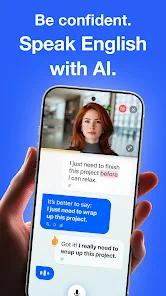
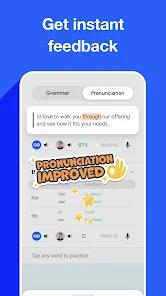
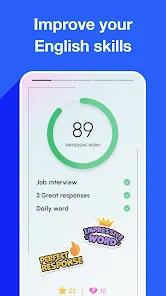
The conversation engine operates in two modes. Open-ended free talk lets you choose a subject and go — the AI plays a natural conversational partner while its acoustic analysis engine quietly grades your pronunciation against native speaker baselines, compares your sentence structure against grammatical targets, and logs corrections. Crucially, feedback is designed not to interrupt: rather than stopping you mid-sentence, the system models the corrected version after the exchange, showing you the gap between what you said and what would have landed more naturally. The goal is flow, not micromanagement.
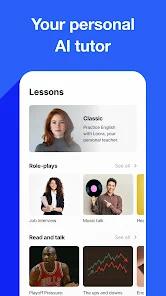
The second mode — professional scenario simulations — is where Loora earns its premium pitch most clearly. Job interview prep, business presentation walkthroughs, client conversation practice: these are high-stakes English contexts where the cost of getting it wrong in real life is real, and where the low-stakes practice environment becomes most valuable. A two-way translation bridge lets you speak in your native language when you genuinely get stuck, and the AI models the English equivalent — reducing the freeze-and-abandon loop that kills sessions in other environments.
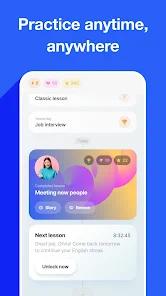
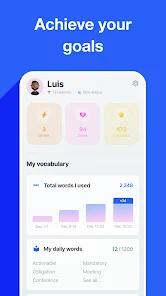
Progress is tracked through weekly fluency scores and full conversation transcripts with highlighted corrections. The transcript feature in particular creates a useful bridge between session practice and deliberate review: you can come back and see, in writing, the specific constructions that keep tripping you up.
The free tier offers one structured lesson per day. Everything else — unlimited free-form conversation, professional scenarios, advanced tracking tools — requires a premium subscription.
What real users say
Two themes dominate the positive side of Loora’s review record. The first is what we’d call the anxiety reduction effect. Users describe the experience as “highly supportive” and “non-judgmental,” and they credit that quality with enabling practice that felt impossible in classroom or tutoring settings — the freedom to be wrong repeatedly without an audience watching. For learners whose spoken English stalls not from lack of knowledge but from fear of embarrassment, that low-stakes environment is the product, not just a feature. The second consistent theme is conversational naturalness: sessions are described as genuinely engaging in a way that traditional exercises aren’t, building confidence rather than just drilling knowledge into memory.
The negative themes are equally consistent. The trial window — sometimes as short as 24 hours — is widely flagged as insufficient to evaluate the curriculum before being pushed to subscribe. One day tells you almost nothing about whether a language learning tool will serve you across weeks and months, and users say so directly. Users read the short window as deliberate friction rather than an oversight. The billing system draws its own frustration: after payment is deducted, premium access sometimes doesn’t activate immediately, requiring follow-up with customer support. That synchronization bug is particularly aggravating when the entire product you just paid for is locked behind the paywall you’re trying to open.
Where it frustrates
The free tier problem deserves honest framing, because it shapes the real value proposition significantly. One lesson per day is not enough to build spoken fluency. Spoken language learning requires volume — many short reps, ideally daily and unrestricted. The free tier is a preview, not a usable product, and the short trial window means you can’t verify whether the premium experience is worth it before committing. That’s a genuine information problem. Most meaningful things about a conversation app — whether the engine feels natural, whether the feedback changes your output, whether the professional scenarios match your context — don’t reveal themselves in a single session under a 24-hour clock.
The dialect limitation is a subtler but real constraint. The pronunciation model grades output against native-speaker baselines that skew toward standard accents, and it can struggle to correctly parse or guide speakers with stronger regional phoneme patterns. For a global English-learning market where learners arrive with an enormous range of phonetic starting points — South Asian English, Brazilian-accented English, West African English — a model that occasionally misreads non-standard pronunciation introduces inconsistency precisely where the app is claiming precision. This won’t derail sessions, but it’s a gap between the marketing promise and the practical experience.
How it compares to alternatives
The honest comparison class is AI conversation practice apps — tools including Speak, ELSA Speak, and the speaking features that Duolingo Max has added. Loora competes on conversation quality and professional scenario depth, and user reports suggest it holds up well on both. Where it’s weaker is accessibility to trial: several competitors offer more generous free tiers or longer evaluation windows, which matters when you’re asking users to make a subscription judgment call on limited evidence. Against the actual alternative for many learners — a paid human tutor — Loora wins comprehensively on availability, cost, and the absence of interpersonal judgment. The honest trade-off is feedback depth: a skilled human tutor catches things a conversational AI still misses, and the professional scenario simulations are approximations of high-stakes situations, not rehearsals with a real interlocutor. But at a fraction of the cost, on demand any hour of the day, most learners would take that trade. For users who’ve already tried the standard beginner course on Duolingo or Babbel and find they’re still not speaking, Loora addresses exactly the gap those products leave.
A note on recency
Version 2.14.1, updated March 27, 2026, means the app is actively maintained — not running on a years-old codebase that stopped getting attention once downloads peaked. For a voice-processing product where the underlying NLP is the core offering, continued development matters: it suggests the acoustic models are being refined, conversation quality is improving, and the platform has a future. The billing synchronization bug is the one place where active maintenance is most urgently needed. A payment-processing failure at the paywall is the worst possible first impression for a new premium subscriber, and it recurs often enough across reviews to qualify as a known issue rather than an edge case.
The verdict
Loora solves the right problem. Spoken fluency comes from practice, and practice requires a low-stakes environment where the cost of being wrong is zero — that’s exactly what a 24/7 AI conversation partner provides, and the review record makes clear the execution is genuinely strong. If you are a non-native English speaker who needs to build real spoken confidence, especially in professional contexts, and you are willing to pay for the premium tier, this is one of the more effective tools in the category.
But “willing to pay” carries weight here. The free tier is too thin to serve as anything but a teaser, the trial window is too short to make an informed decision, and the billing activation bug means the moment you do pay could greet you with a frustrating wait rather than immediate access. Loora earns its 4.9 rating from the learners it converts — and for them, the product clearly delivers. The harder question is whether you can get enough evidence to know you’re one of those learners before you’ve already committed.
How We Evaluate
We judge every app on the same checklist: the real problem it solves, how well it delivers on that promise, where users hit friction, and who should walk away. For Loora, the central question is whether an AI conversation engine can actually move the needle on spoken fluency — so we read across recent Play Store reviews, worked through the full feature set and onboarding design, and weighed recurring user-review themes against what the free tier actually delivers. We did not conduct hands-on device testing.
Pros & Cons
24/7 Conversational Partner: Provides continuous speaking practice without the scheduling conflicts or high costs of human tutoring.
Safe, Low-Anxiety Environment: Helps learners build confidence and practice pronunciation without the fear of interpersonal judgment.
Practical Career-Focused Scenarios: Features structured lessons for professional situations like job interviews and business meetings.
Immediate Grammar and Pronunciation Help: Pinpoints specific structural mistakes and suggests natural phrasing alternatives.
Tailored User Progress Paths: Automatically adjusts conversational complexity to align with the learner’s CEFR level.
- ✕
Highly Restrictive Free Access: The free tier is limited to a single daily lesson, making a paid subscription necessary for immersive practice.
- ✕
Very Short Free Trial Windows: Some trial options are limited to 24 hours, giving users little time to evaluate the curriculum.
- ✕
Transaction and Activation Errors: Users report synchronization bugs where premium access is delayed after payment is deducted.
- ✕
Pronunciation Issues with Regional Dialects: The voice model can occasionally struggle to correctly parse and guide heavy regional accents.
Download
 Get it on Google Play
  Get it on App Store
 FAQs
How does Loora analyze speech and pronunciation?
The application processes voice input through acoustic analysis models, comparing the user’s phonemes, rhythm, and syntax against native speaker baselines.
Can absolute beginners use Loora effectively?
Yes, onboarding allows users to set beginner profiles, which adjusts the AI to use simpler vocabulary and provide on-screen translations.
What is the difference between the free and premium tiers?
The free plan is limited to one short structured lesson per day, while the premium plan unlocks unlimited free-form conversation, professional scenarios, and advanced tracking tools.
Does the application support lessons for business and professional environments?
Yes, Loora features customized lessons tailored to workplace discussions, presentation skills, and job interview prep.
Can users review written transcripts of their conversations?
Yes, the app logs full conversation transcripts, highlighting specific grammatical and pronunciation corrections for review.
Hot Reviews
The interactive sessions feel much more natural and engaging than traditional exercises, helping users build speaking confidence and conversational flow.
The free trial is highly limited. Offering only a single day or lesson of free access makes it difficult to evaluate the app’s long-term value before subscribing.
Users report technical payment issues where subscriptions are not immediately activated after payment, requiring follow-up with customer support.
The app acts as a highly supportive, non-judgmental environment. It provides a comfortable space for learners to practice speaking without feeling self-conscious.