
Language Therapy for Children



Overview
Language Therapy for Children (Mental Imagery Therapy for Autism) is a clinically validated early-intervention cognitive therapy application designed for children with language delays, Autism Spectrum Disorder (ASD), Down syndrome, and other neurodevelopmental challenges. Developed by neuroscientist Dr. Andrey Vyshedskiy of Boston University alongside early childhood development specialists from Harvard and MIT, MITA targets Prefrontal Synthesis (PFS)—the brain's ability to integrate multiple mental objects into a single cohesive image.
Children with developmental delays or autism can sometimes experience stimulus overselectivity, often described as "tunnel vision". When observing a complex object, they may focus heavily on a single feature (like its color) while overlooking other important details (like its shape or size). This cognitive challenge can directly impact language development, particularly the comprehension of prepositions, syntax, adjectives, and verb tenses.
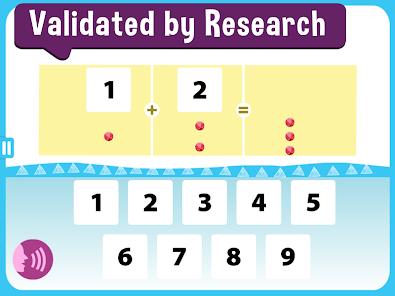
MITA addresses this challenge by providing adaptive visual and verbal exercises that systematically train the brain to process multiple features of an object at the same time. The clinical efficacy of MITA is backed by extensive scientific research.
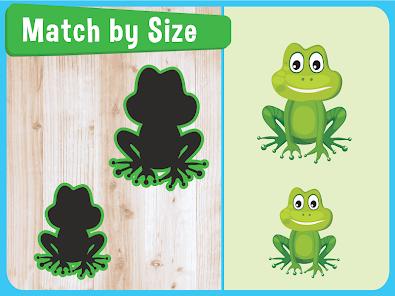
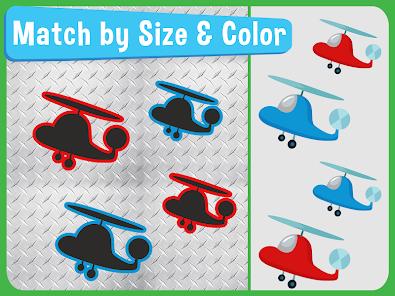
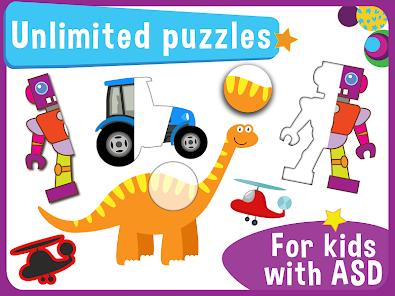
The app's structured curriculum starts with simple matching exercises that require the child to focus on a single feature, such as size or color. Once the child demonstrates consistent accuracy, the adaptive algorithm increases the difficulty, requiring the integration of multiple traits simultaneously (such as finding a star that is both small and red). These exercises gradually transition from non-verbal visual puzzles to verbal language acquisition tasks, introducing prepositions, spatial relations (on, under, behind), and syntax.
While MITA can be a valuable tool to support cognitive growth, parents and caregivers should consult with qualified pediatricians, speech-language pathologists, or behavioral therapists to develop a comprehensive intervention program tailored to their child's specific developmental needs.
Pros & Cons
Clinically Proven Efficacy: Demonstrated in peer-reviewed, multi-year clinical trials to significantly improve language and cognitive scores.
Targets Core Cognitive Pathways: Focuses directly on stimulus overselectivity, helping children develop crucial visual integration skills.
Real-Time Adaptive Learning: Automatically calibrates puzzle difficulty to keep challenges constructive and encouraging for the child.
Supports Multilingual Learners: Available in 11 major languages, including English, Spanish, Portuguese, Russian, and Arabic.
Simple Interactive Layout: Uses intuitive drag-and-drop mechanics, making the app accessible to toddlers and children with motor challenges.
- ✕
Complex Multi-Device Setup: Setting up, syncing, and restoring premium accounts across multiple tablets and phones can sometimes be confusing for parents and educators.
- ✕
Requires Active Supervision: To get the full therapeutic value, parents must guide children to solve puzzles mentally before dragging the answers into place.
- ✕
Steep Price for Advanced Features: The full therapeutic curriculum and advanced levels are locked behind premium subscription plans.
- ✕
Simple Visual Design: The graphics and animations are relatively simple and may struggle to engage children who are used to high-stimulus commercial games.
Download


FAQs
What is "Prefrontal Synthesis," and why does MITA focus on it?
Prefrontal Synthesis (PFS) is the cognitive process of mentally combining separate visual elements into a single cohesive image. This ability is essential for understanding complex grammar, syntax, and spatial instructions, which can sometimes be difficult for children with autism or language delays.
Is MITA suitable for non-verbal children who are just starting therapy?
Yes, MITA begins with non-verbal visual puzzles that do not require any reading or spoken language skills. This design allows non-verbal children to develop visual integration pathways before gradually introducing verbal vocabulary, adjectives, and syntax.
Can MITA be used as a replacement for traditional speech therapy?
No, MITA is designed to be a digital therapeutic supplement. It works best when used alongside conventional speech-language therapy, Applied Behavior Analysis (ABA), and classroom learning.
How can teachers and therapists monitor progress for multiple children?
The platform features a parent/educator dashboard with detailed evaluations and tracking charts. Therapists can manage separate profiles for individual students by setting up custom student accounts within the app's database.
What devices are best suited for running MITA exercises?
While MITA can be installed on most Android smartphones, the developer recommends using larger tablets (such as an iPad, Kindle Fire, or larger Android tablets) to make visual interaction and motor coordination easier for young children.
Hot Reviews
Many parents report that after using the app consistently, their children began to think more logically and started saying words in real time as they solved the visual puzzles.
The systematic increase in difficulty—from single-trait matching to complex, multi-feature puzzles—is highly effective for encouraging cognitive growth.
Some users find the registration and restore features complicated when trying to sync a single paid profile across multiple family devices.
A few parents note that the app's quiet, educational pace can sometimes make it hard to keep children engaged if they are used to louder, more fast-paced games.