
Depop - Buy & Sell Clothes
Depop is one of the strongest vintage and streetwear marketplaces on mobile — but it rewards active participants and quietly punishes everyone who treats it as a passive listing tool or a scam-free zone.
- Active vintage and streetwear sellers who enjoy curating a shop aesthetic and are willing to refresh listings, respond quickly to buyers, and stay visible in a competitive feed
- Fashion-forward buyers specifically hunting for rare Y2K pieces, premium streetwear, or niche independent labels — and who know how to read a seller's history before committing
- Sellers who want to list once and wait — the algorithm deprioritises dormant shops, and the maintenance overhead is real
- Buyers who won't vet sellers carefully or who are tempted to complete transactions outside the app, where buyer protection ceases to exist entirely





Overview
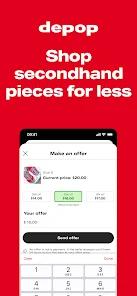
Depop has solved the hardest part of secondhand fashion — making it feel like scrolling Instagram rather than digging through a charity shop bin — and that social-first design is genuinely its competitive advantage, not a cosmetic choice. The discovery experience is excellent, the AI listing tools are meaningfully useful, and for vintage clothing, Y2K pieces, and premium streetwear the audience depth is hard to match elsewhere. But the platform runs on activity. Sellers who won’t work the algorithm, buyers who won’t vet sellers carefully, and anyone tempted to complete a deal outside the app will find that the gaps find them faster than the rewards do. That’s not a knock on what Depop is — it’s an honest description of what Depop requires.
What Depop actually is
Owned by Etsy, Depop is a social commerce marketplace built specifically for vintage fashion, Y2K apparel, streetwear, and independent designer labels. The Instagram-style architecture is deliberate: a visual feed, seller profiles that function like curated shops, hashtag-powered discovery, and direct messaging that encourages negotiation and repeat custom. That social DNA sets the platform apart from purely transactional marketplaces. On Depop, the presentation of a garment carries weight — a well-lit, styled photo of a vintage Levi’s jacket will outperform a flat, poorly composed shot of the same item, and the platform’s buyer base has been self-selected by this culture for years.
The result is a marketplace with genuine identity. You come here for the rare label, the well-worn vintage piece, the limited streetwear drop. If that’s your inventory, you’re in front of an audience that specifically wants it and understands its value. If you’re trying to shift three-year-old high-street basics, the platform will technically accommodate you — but it’s not the most efficient place to do it, and you’ll be competing with sellers who live and breathe this stuff.
The content rating (“Teen • Diverse Content: Discretion Advised”) is worth flagging if you’re considering the app for a younger teenager — it reflects the breadth of independent sellers and the platform’s openness to a wide range of fashion content, some of which skews adult.
The selling experience
The listing process is where Depop has invested most visibly. Upload a photo of a garment and the integrated AI system automatically drafts a product description, attempts to identify the brand, suggests sizing, and applies relevant tags. It doesn’t always nail the brand or category with precision, but it meaningfully reduces the friction of getting from photo to live listing. Sellers can also edit product images within the app using integrated Photoroom backgrounds, which matters on a platform where shop aesthetic drives buyer trust and return visits.
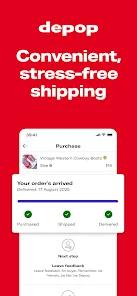
Payment processing runs through Depop Payments (built on Stripe) or PayPal, which keeps card details out of sellers’ hands and gives buyers a documented payment trail. Shipping is flexible: sellers can use prepaid labels with printerless QR-code drop-off options, or arrange their own courier. In major markets including the US and UK, Depop charges 0% as a base selling fee — though standard payment processing fees still apply, and optional boosting features carry their own costs. For anyone who has navigated Poshmark or eBay’s fee structures, that 0% base is a genuine differentiator. The path from account creation to first live listing is smooth by resale-marketplace standards.
The algorithm tax on visibility
Here’s what the listing flow doesn’t communicate: getting a listing live is the easy part. Staying visible is the actual job. Depop’s algorithm surfaces sellers who regularly refresh their listings, respond quickly to buyers, and maintain active shops. A dormant listing drifts out of search results, regardless of how desirable the item is or how competitive the price. This isn’t a small friction point — it’s a structural requirement baked into the platform’s design.
The platform’s own guidance makes the expectations explicit: update listings during peak evening hours, use vertical 4:5 crops, write descriptive keywords. These aren’t optional optimisations for power sellers — they’re table stakes for basic visibility in a marketplace where thousands of comparable items compete for the same buyer scroll. Sellers who enjoy the content-creation dimension of this — photographing, styling, writing — will find the rhythm natural and even satisfying. Sellers who want to clear their wardrobe with minimal ongoing effort will find the maintenance overhead a genuine barrier. That distinction is worth sitting with before committing time to building a shop.
What real users report
The dominant positive theme across reviews is the discovery experience: buyers describe browsing as effortless and genuinely enjoyable — “more like a social media feed than a retail site” — and for vintage and streetwear specifically, they report that rare, well-styled pieces surface reliably. Cultured buyers, reviewers note, are willing to pay solid prices for the right finds. On the seller side, the AI listing tools and the 0% base fee are consistently cited as standout advantages over alternative platforms.
The dominant negative themes are counterfeit goods and automated account moderation. Multiple buyers flag that the marketplace contains a meaningful volume of counterfeit items — designer fakes sold as authentic — and that distinguishing real pieces from fakes requires careful scrutiny of seller history, review quality, and listing photography rather than trusting surface-level presentation. On the seller side, automated moderation is the recurring flashpoint: accounts can be flagged and listings removed with little explanation and slow support response times. The review culture compounds both problems. Depop’s ratings trend heavily positive — a characteristic of close-knit resale communities — which means a seller with a strong aggregate score isn’t necessarily a fast shipper or an accurate describer. What matters is reading recent reviews, not headline stars.
The scam problem nobody advertises
The most acute risk on Depop — for both buyers and sellers — is off-platform solicitation. Scammers routinely make contact through the messaging system to request that transactions be completed outside the app, typically through payment methods where chargebacks are unavailable or difficult. The reason this matters: Depop’s Buyer Protection only applies to transactions completed entirely within the app. The moment a buyer pays outside of Depop — regardless of what the seller promises — that protection is gone. This isn’t buried in fine print; the platform’s own FAQ states it clearly. But it’s a pattern that recurs in user reviews frequently enough to be worth treating as a known risk rather than an edge case.
The platform’s automated moderation flags sellers who include external contact links in their listings, which signals awareness of the problem. But the pressure typically happens inside direct messages, where it’s harder to catch algorithmically and where a buyer who is excited about a find may be more susceptible. The practical defence is simple and worth stating plainly: never pay outside the app, and if you’re selling, never accept payment outside the app. The protection structure only works if both parties stay inside it.
How it compares
Against Vinted — the most direct competitor for secondhand clothing in the UK and Europe — Depop positions itself at the higher-curation, higher-price end of the market. Vinted skews toward budget buyers and everyday items; Depop skews toward premium vintage, limited streetwear, and niche labels where styling justifies a markup. If you want to move last season’s high-street pieces quickly and at the lowest transaction cost, Vinted’s structure arguably makes more practical sense. If you’re selling or hunting curated or rare pieces and want to reach buyers who understand their value, Depop’s audience is the better fit.
Against Poshmark — more dominant in the US market — Depop’s social layout and Gen Z-native aesthetic make the browsing experience feel more alive, though Poshmark’s community event structure offers a different kind of seller visibility that some find effective. Against eBay, Depop wins decisively on audience specificity for fashion. eBay has the vintage inventory and the buyer scale, but not the cultural context that lets a seller command a premium for presentation quality and curation. Each platform has its niche. Depop’s is unusually well-defined, which is a strength for sellers and buyers who fit it — and a limitation for those who don’t.
A word on recency
The app is actively maintained — version 2.394, updated June 4, 2026 — and Etsy’s ownership means it’s backed by infrastructure and payment processing resources that smaller resale platforms typically can’t match. That stability matters for platform reliability, dispute resolution, and the long-term viability of seller shops. It’s not a startup bet; it’s an established marketplace with a documented track record.
The verdict
Depop is a genuinely strong marketplace for its intended audience — active vintage and streetwear participants who understand that visibility requires work and that buyer safety requires staying on-platform. The social design is effective, the AI listing tools save real time, the 0% base selling fee is competitive, and the audience density for niche fashion is difficult to match. The counterfeit risk and off-platform scam patterns are real, documented, and worth taking seriously rather than hoping to avoid. Go in as an active participant who reads seller histories carefully and never completes a transaction outside the app, and Depop earns its place as one of the better-built resale experiences on Android. Go in expecting a passive listing tool or an automatically safe marketplace, and the gaps will find you.
How We Evaluate
We assess every app on the same checklist: what it genuinely delivers, how honest the pitch is, where real users get burned, and who should look elsewhere. For Depop that means weighing the social-marketplace model against the documented friction points — scam patterns, counterfeit risk, algorithmic visibility demands, and automated moderation. We read across the app's signal data, Play Store user reviews, and the platform's own FAQ to ground every claim.
Pros & Cons
Zero Base Selling Fees: Operating with 0% listing fees in primary regions allows sellers to maximize their profit margins on completed orders.
Intuitive Social Layout: The Instagram-style layout, visual feeds, and hashtag search options make the platform highly engaging and familiar.
AI-Assisted Listing Creation: Integrated image processing and automatic description generators drastically reduce the time needed to create a listing.
Targeted Niche Demographics: The platform has an active, dedicated base of Gen Z and millennial buyers specifically looking for vintage and streetwear styles.
Secure Payment Processing: Transactions are handled securely using Stripe (via Depop Payments) and PayPal, keeping card details hidden from sellers.
Streamlined Fulfillment Options: Features like printerless, QR-code shipping options simplify parcel drop-offs at local couriers.
- ✕
Vulnerability to Off-App Scams: Scammers frequently attempt to lure users off the platform to complete payments, which voids all buyer protections.
- ✕
Algorithmic Visibility Demands: Staying visible in search results requires continuous listing updates, messaging, and active shop management.
- ✕
Aggressive Automated Account Moderation: Automated moderation flags can sometimes result in sudden, unexplained listing removals or account suspensions.
- ✕
Inconsistent Review Reliability: The app's review culture tends to skew highly positive, which can sometimes make it difficult to identify slow or unreliable shippers.
Download
 Get it on Google Play
  Get it on App Store
 FAQs
Are there fees for listing and selling items on the platform?
Listing items is completely free. While base selling fees are 0% in major regions like the US and UK, standard payment processing fees and optional boosting fees still apply.
How does the Buyer Protection Policy secure transactions?
The policy covers buyers if an item never arrives, is lost in transit, or arrives significantly different from its description. This protection is only valid for transactions completed entirely within the app.
Can sellers customize shipping methods?
Yes, sellers can choose between using prepaid shipping labels provided directly by the platform or arranging their own shipping through external couriers.
What are the best strategies to increase shop sales?
Sellers should focus on taking high-quality photos in natural light, using vertical 4:5 crops, writing descriptive keywords, and updating listings during peak evening hours.
Why do some listings get removed by moderation?
The automated moderation system flags listings for using off-brand hashtags, including external contact links, uploading stock photos, or listing prohibited items.
Hot Reviews
The visual layout makes browsing feel effortless and fun. It feels more like a social media feed than a retail site, making it easy to discover unique fashion finds.
For niche vintage clothing, the app delivers excellent results. Cultured buyers are willing to pay solid prices for rare, well-styled streetwear pieces.
Multiple buyers note that the marketplace contains a high volume of counterfeit items, requiring extra vigilance and review of seller ratings before purchasing.
Sellers have expressed frustration with the automated account flagging system, noting that accounts can sometimes be restricted with little explanation or slow support response times.