phyphox
Overview
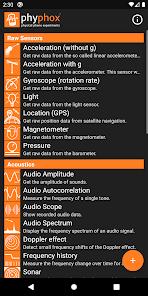
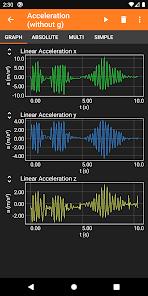
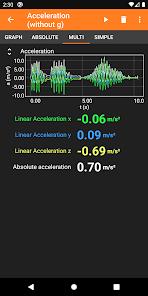
The development of "Phyphox" (Physical Phone Experiments) by the 2nd Institute of Physics at RWTH Aachen University represents a significant milestone in the field of mobile-assisted science education. At its core, the application serves as a middleware layer that interfaces directly with the Micro-Electro-Mechanical Systems (MEMS) sensors embedded within modern smartphones. These sensors, which include accelerometers, gyroscopes, magnetometers, and barometers, were originally integrated into hardware for navigation and screen orientation. However, Phyphox repurposes them to facilitate high-precision physical measurements in real-time.
The application architecture is designed around the concept of the "experiment," which acts as a logical container for data acquisition, processing, and visualization. For example, the Acoustic Stopwatch experiment utilizes the microphone to trigger a timer based on sound intensity thresholds, effectively replacing specialized timing gates in kinematics experiments. In a classroom setting, this allows for the empirical verification of physical constants, such as the acceleration due to gravity (g approx 9.81, m/s^2) through free-fall experiments where the phone measures the time between an initial sound (release) and a final impact sound.
A critical technical innovation within Phyphox is the implementation of a localized web server on the device. When enabled, this allows for remote telemetry via a standard web browser on a secondary device, such as a desktop computer or tablet. This capability is indispensable for experiments where the smartphone is physically isolated—for instance, within a rotating centrifuge to measure centripetal acceleration or attached to a pendulum in motion. The data flow follows a structured path from the hardware abstraction layer to the Phyphox logic engine, where it can be exported in formats such as CSV or Excel for rigorous statistical analysis.
The application's pedagogical utility is further enhanced by its modularity. Users are not limited to pre-defined experiments but can utilize the Phyphox Experiment Editor to design custom logic flows that combine multiple sensor inputs. This level of technical depth distinguishes Phyphox from generic sensor-monitor apps, positioning it as a professional-grade tool for both secondary and higher education.
Pros & Cons
The application is provided entirely free of charge and contains no advertising, ensuring that educational institutions can deploy it across student populations without budgetary or data-privacy concerns.
The ability to control and monitor the app via a local network web server allows for data acquisition in physically hazardous or inaccessible experimental setups.
High-resolution data can be exported in various industry-standard formats (CSV, Excel, JSON), facilitating seamless integration with professional analysis tools like MATLAB or Python.
Support for Bluetooth Low Energy sensors allows the app to extend its functionality beyond built-in hardware to include specialized external scientific probes.
The platform hosts a vast global library of experiments shared by educators, which can be imported via QR codes, fostering a collaborative pedagogical ecosystem.
- ✕
The precision of the measurements is fundamentally limited by the quality of the device's internal MEMS sensors, which can vary significantly between budget and flagship hardware.
- ✕
A minority of users on specific firmware versions have reported crashes during the final save/export process, which can lead to the loss of long-duration experimental data.
- ✕
The advanced nature of the experiment editor presents a steep learning curve for users who lack a foundational understanding of data logic and signal processing.
Download


FAQs
Can I use Phyphox without a network?
Yes, the core functionality of the application is entirely local. Internet or local network access is only required for the remote access feature or for downloading new experiment templates.
Does the app drain battery quickly?
High-frequency sensor sampling (e.g., at 100 Hz or higher) and constant screen-on status for data visualization will significantly increase power consumption compared to standard apps.
How do I calibrate my sensors?
While the app provides raw data, it also includes tools for zero-point calibration and offset adjustment to improve the accuracy of relative measurements.
Is my phone’s GPS data shared?
Phyphox is designed with a privacy-first approach; location data is only accessed if a specific experiment requires GPS input, and the app does not transmit this data to external servers.
Can it measure magnetic field strength?
Yes, utilizing the device's magnetometer, Phyphox can measure the three components of the magnetic field (B_x, B_y, B_z) and the total magnitude in microteslas (muT).
Hot Reviews
Educators report that the application has fundamentally changed the way physics is taught, turning every student’s pocket into a laboratory and allowing for hands-on experimentation during remote learning phases.
Users have expressed astonishment at the app's sensitivity, noting its ability to detect the minute change in barometric pressure between a floor and a tabletop.
Some advanced users warn that while the app is brilliant, one must be cautious with long-term data recording as background system processes can occasionally interrupt the data stream or cause a crash.