
Gossip Harbor: Merge & Story




Overview
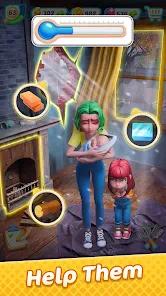
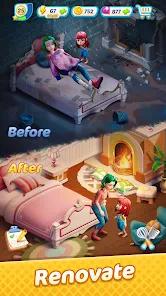
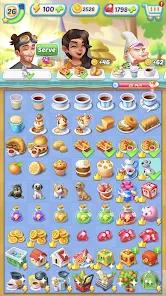
Gossip Harbor: Merge & Story is a narrative-driven simulation game that has defined the "Merge-2" genre since its launch by Microfun Limited. The application follows the life of Quinn Castillo on Brimwave Island as she navigates a divorce, the suspicious fire that destroyed her father's restaurant, and the deep-seated secrets of her neighbors. Functionally, the game uses a board where players merge food items—coffee, sandwiches, and seafood—to fulfill orders. These completed orders provide "Harbor Coins," which are used to rebuild the restaurant, choosing specific furniture, flooring, and décor.
A deep insight into Gossip Harbor reveals its unique "Serialized Content" model. Every Friday, the developers release a new episode of the story, effectively turning the game into an interactive soap opera. This high-frequency content update schedule is the primary driver of its 50 million+ downloads and high daily active user (DAU) counts. However, the game's "Energy Economy" is a point of significant strategic debate. With a regeneration rate of one unit every 1.5 minutes and a 100-unit cap, players are often restricted to short play sessions unless they engage in micro-transactions or watch ads.
From a technical perspective, the game is highly optimized for "stylized" visual storytelling. The character art is expressive, and the transitions between the merge board and the renovation world are seamless. The game also incorporates mini-games and seasonal events (like the "Palace of Prosperity") that offer variety beyond the core merge loop. For the modern gamer, Gossip Harbor represents the shift toward "Emotional Retention"—users don't just stay for the puzzles; they stay because they genuinely want to know who the arsonist is or how Quinn's romantic prospects will develop.
Pros & Cons
The narrative writing is of exceptionally high quality for a mobile game, featuring genuine mystery and relatable character drama.
The weekly update schedule ensures that veteran players always have new content to explore every Friday.
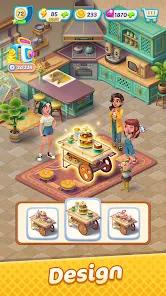
The renovation aspect allows for a high degree of visual customization, making the process of rebuilding the restaurant personally rewarding.
Events and mini-games provide alternative ways to earn energy and rare items, keeping the gameplay from becoming repetitive.
The application features a very polished user interface with minimal bugs and fast loading times across a wide range of devices.
- ✕
The game is frequently described as "pay-to-win" or "pay-to-play" after level 40, as energy costs for high-level items become prohibitive.
- ✕
The energy regeneration rate is quite slow compared to the requirements of complex, high-tier orders.
- ✕
Some users have noted that recent updates have reduced the availability of ad-based free rewards, making it harder for free-to-play users to compete.
Download


FAQs
Who is the main character in Gossip Harbor?
You play as Quinn Castillo, who returns to her hometown to rebuild her father's restaurant and uncover the mystery of who burned it down.
How do I get more energy in the game?
Energy regenerates automatically (1 per 1.5 mins). You can also get energy from batteries, daily rewards, or by purchasing gems.
Are there new story chapters added regularly?
Yes, new story episodes are released every Friday, continuing the mystery of Brimwave Island.
Is Gossip Harbor an offline game?
You can perform basic merges offline, but story progression, events, and the store require an active internet connection.
Can I replay previous story chapters?
Currently, the game focuses on linear progression, and there is no built-in feature to replay completed story episodes.
Hot Reviews
The "soap opera" style of storytelling is a major draw. Users often report that they are more interested in the "gossip" and the arson mystery than the actual merging mechanics.
Many players have noted a significant difficulty spike around level 40. At this point, orders require so much energy that progress can slow to a crawl for non-paying users.
The game is frequently praised for its beautiful character designs and smooth interface. Users find the renovation process to be one of the most satisfying parts of the experience.